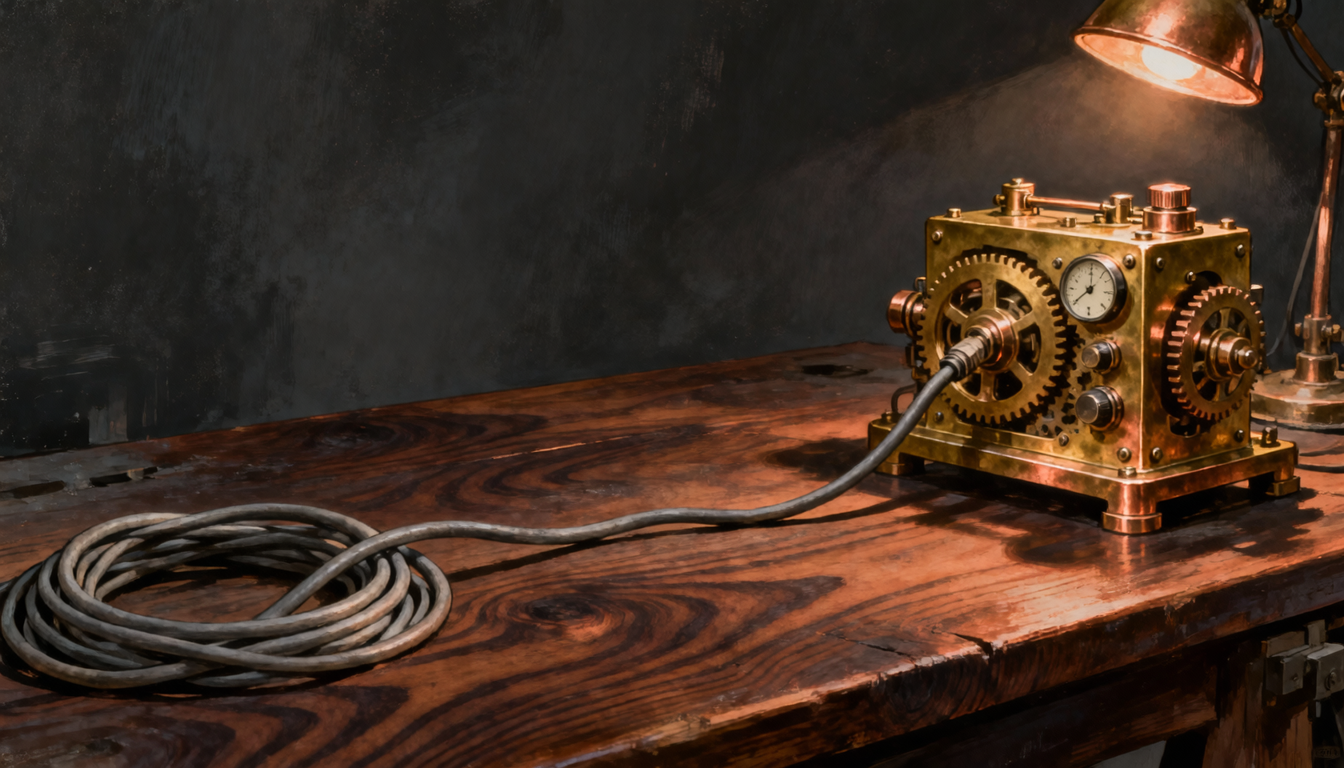
The AI model is out.
Not gone — out. Finished as a place to compete. Everyone still talks about the model as if it were the whole story: which one is smartest this week, whose benchmark just moved, who shipped the biggest one. None of that is the important thing anymore.
Here’s what actually happened. Token prices fell roughly 600× in six years. A model that cost $60 per million tokens in late 2021 now costs pennies. Open-weight models do for free most of what the flagship ones charged for. The model became a commodity — something you rent by the meter and swap out whenever a cheaper one is smart enough.
So if the model is a commodity, the model is not where the value is. The value moved one layer up.
You can already see it happening. Look at what people are actually building now: OpenHands, an open-source software-engineering agent with the better part of a hundred thousand GitHub stars. OpenClaw (formerly Clawdbot), a personal agent runtime that wires the model into every channel you already use. Hermes, the self-improving agent that writes its own skills as it works. DeepSeek Harness, the plugin-first runtime that pulled in tens of thousands of stars within days of shipping. None of these won by having a smarter model — they all rent models. They won by owning the layer around the model.
That layer is the harness.
The harness is the part you actually own.
The harness is everything that isn’t the model. The tools. The context. The memory. The guardrails. The workflow. The loop that decides what the model sees, what it’s allowed to do, and what happens to its output. The model reasons for a second. The harness is what keeps working all day.
Think of it this way: the model is the cable, the harness is the rig. You do the work with the rig, not the cable.
And here’s the part most people miss — while the model got cheaper, the harness got more valuable, for the same reason any scarce layer next to an abundant one does. When reasoning is cheap and roughly interchangeable, the thing that separates a system that finishes the job from one that stalls is the scaffolding around the model, not the model itself. The same model, two different harnesses, can rank first or last on the exact same task.
That’s the shift worth paying attention to in 2026. For years the question was “which model?” The question that actually predicts whether your build ships is “which harness?” — and whether you treat the harness as the craft, instead of the model.
For a solo builder this is roughly all good news. You were never going to win the model race. But the harness is a clean example of the same split that runs through your whole cost base: the model is a meter you rent and watch, while the rig is the part you own and keep. One of those you can build on; the other you just pay for.
If the model is out, the harness is in. That’s the next thing to get good at.